Pancreatic Cancer, Proteolytic Enzyme Therapy and Detoxification
Excerpted with permission from the November 1999 Clinical Pearls News
Kirk Hamilton: What is your educational background and current position?
Nicholas J. Gonzalez: I graduated from Brown University, Phi Beta Kappa, Magna Cum Laude with a degree in English literature. I did my premedical work as a postgraduate student at Columbia University, and received my medical degree from Cornell University Medical College in New York. I subsequently completed a year of internship in internal medicine, and a fellowship in immunology.
KH: Where did you come up with the idea at all to use pancreatic enzymes in cancer and what is the theoretic mechanism?
NJG: I didn’t come up with the idea to use pancreatic enzymes to treat cancer. The Scottish embryologist, John Beard, who worked at the University of Edinburgh at the turn of the century, first proposed in 1906 that pancreatic proteolytic enzymes, in addition to their well-known digestive function, represent the body’s main defense against cancer. He further proposed that pancreatic enzymes would most likely be useful as a cancer treatment. During the first two decades of this century, a number of physicians, both in Europe and in the United States, used injectable pancreatic enzymes to treat advanced human cancer, often times (depending on the quality of the product) with great success. I have collected a number of reports from that time in the major medical journals documenting tumor regression and long-term survival in patients treated with enzyme therapy. In my first article, I mentioned that in 1911, Dr. Beard published a monograph entitled The Enzyme Therapy of Cancer, which summarized his therapy and the supporting evidence. [Available through New Spring Press]
After Dr. Beard’s death in 1923, the enzyme therapy was largely forgotten. Periodically, alternative therapists have rediscovered Dr. Beard’s work, and used pancreatic proteolytic enzymes as a treatment for cancer.
I began researching the use of oral pancreatic proteolytic enzyme therapy as a treatment for cancer after completion of my second year at Cornell University Medical College in 1981. My research advisor at the time supported and directed my early work, and later supported me during my formal immunology fellowship. In terms of the theoretical foundation, the exact mechanism of action has never been demonstrated. After Beard’s death, the enzyme therapy was largely forgotten and certainly never generated any significant research effort until recently with the funding of my work. There are several studies from the 1960s showing, in an animal model, that orally ingested pancreatic enzymes have an anti-cancer effect, and might work through immune modulation, but these studies were preliminary and were never followed-up. Dr. Beard believed enzymes had to be injected to prevent destruction by hydrochloric acid in the stomach. However, recent evidence demonstrates that orally ingested pancreatic proteolytic enzymes are acid stable, pass intact into the small intestine and are absorbed through the intestinal mucosa into the blood stream as part of an enteropancreatic recycling process.
It is clear from our extensive clinical experience that pancreatic proteolytic enzymes have a profound anti-neoplastic effect, but we do not know how they work. We have not had the resources to support basic science research, but with appropriate funding we do not believe it would difficult to set up animal models to explore the molecular action of the enzymes against cancer cells.
KH: Why did you choose a vegetable-based diet, low in red meat and poultry, with a little fish and occasional dairy products?
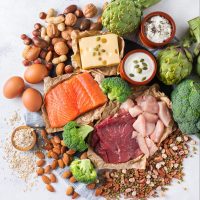
NJG: We divide patients into different metabolic categories, depending on each patient’s particular genetic, biochemical and physiological make-up. In this model, patients with solid epithelial tumors, such as tumors of the lung, pancreas, colon, prostate, uterus, etc. do best on a largely plant-based diet. Such patients have a metabolism that functions most efficiently with a specific combination of nutrients that are found in fruits, vegetables, nuts, whole grains and seeds, and with minimal to no animal protein.
On the other hand, patients with the blood or immune based malignancies such as leukemia, myeloma and lymphoma do best on a high-animal protein, high-fat diet. Such patients do extremely well with a diet based on animal products with minimal to moderate amounts of plant based foods, the particular design of the diet again depending on the individual patient’s metabolic make-up. We find patients with pancreatic cancer always do best with a largely plant-based diet that emphasizes fruits, vegetables and vegetable juice, nuts, seeds and whole grains. Allowed protein includes fish one to two times a week, one to two eggs daily and yogurt daily, but no other animal protein. In our therapy, we use diets specifically because of the effect of food on the autonomic nervous system. This system consists of the sympathetic and parasympathetic branches and ultimately controls all aspects of our physiology, including immune function, cardiovascular activity, endocrine function and the entire action of our digestive system. The sympathetic and parasympathetic systems have opposing actions on the target organs and so can adjust our physiology depending on needs and demands, enabling our bodies to react to any situation, condition or stress. We believe disease, whatever the form, occurs because there is an imbalance in autonomic function. For example, we find solid tumors, such as tumors of the breast, lung, pancreas, colon, uterus, ovaries, liver, etc occur only in patients who have an overly strong sympathetic nervous system and a correspondingly weak, ineffective parasympathetic nervous system. We believe that blood-based cancers, such as leukemia, lymphoma and multiple myeloma, only occur in patients that have an overly developed parasympathetic nervous system, and a correspondingly weak sympathetic nervous system. Previous research, such as Dr. Francis Pottenger’s research during the 1920s and 1930s proposed that much if not all disease has autonomic imbalance as at least one of the major causes.
We have found that specific nutrients and foods have specific, precise and predictable effects on the autonomic nervous system. For example, a vegetarian diet emphasizes fresh fruits and vegetables, particularly leafy greens, and contains large doses of minerals such as magnesium and potassium. It has been shown in many studies that magnesium suppresses sympathetic function, while potassium stimulates parasympathetic activity. Furthermore, a largely vegetarian diet tends to be very alkalinizing, and the neurophysiologic research documents that in an alkalinizing environment, sympathetic activity is reduced and parasympathetic activity increased. So, whatever other effect a vegetarian diet has, in terms of autonomic nervous system function, such a diet will reduce sympathetic activity and stimulate the parasympathetic system.
A meat diet is loaded with minerals such as phosphorous and zinc, which tend to have the opposite effect. A high-meat diet stimulates the sympathetic system and tones down parasympathetic activity. Furthermore, such a diet is loaded with sulfates and phosphates that in the body are quickly converted into free acid, that in turn stimulates the sympathetic nervous system while suppressing parasympathetic activity.
So, by the careful use of diet, we are able to effect major changes in autonomic function, and bring about balance in a dysfunctional nervous system. We find, further, as the autonomic system comes into greater harmony and balance, when the autonomic branches are equally strong, all systems – from the immune system to the cardiovascular system – work better regardless of the underlying problem. In essence, we are using diet to bring about greater physiological efficiency. For cancer patients, long experience has taught us that it is not enough to load patients with enzymes; the question of autonomic imbalance must also be addressed. In terms of pancreatic patients specifically, a plant-based diet provides all the nutrients to correct autonomic dysfunction.
KH: Can you describe the vitamin and mineral supplement regimen you used? Was it megadoses or a basic nutritional support?
NJG: All of our patients, whether they have cancer or some other problem, consume specific combinations of vitamins, minerals, trace elements, amino and fatty acids, and animal-derived glandular and organ concentrates. We use such supplements very specifically, in very precise doses and combinations as we use diet, to manipulate autonomic function and to bring about balance to an imbalanced system. Certain vitamins, minerals and trace elements, such as many of the B vitamins and, as mentioned above, magnesium and potassium, tone down the sympathetic nervous system and stimulate the parasympathetic nerves. Other nutrients, particularly calcium, phosphorous and zinc, stimulate the sympathetic system but weaken the parasympathetic system. By the use of precise combinations of vitamins, minerals and trace elements, along with diet, we are able to bring about balance to the autonomic system. And, again, when the autonomic branches come into balance, the patients, whatever the underlying disease, do better.
KH: What is the role of coffee enemas in this particular treatment and what is the history of coffee enemas in traditional medicine?
NJG: When I first began my research efforts, I was very surprised to find that the coffee enemas, often portrayed as one of the most bizarre aspects of alternative medicine, came right out of the Merck Manual, a revered compendium of orthodox treatments. When I was completing my immunology fellowship, I had an interesting correspondence with the then editor of the Merck Manual, who confirmed that the coffee enemas had been advocated in the Merck Manual from about 1890 right up until 1977, when they were removed more for space considerations than anything else. Most nursing texts for the better part of the century recommend coffee enemas. Particularly during the 1920s and 1930s coffee enemas were used in the US and abroad to treat a variety of conditions, and I have put together a library of articles from that time discussing the wide ranging effects on patients. Coffee enemas were frequently recommended because patients, whatever their underlying problem, tended to feel better after a coffee enema. I have followed thousands of patients over the years who have done coffee enemas in some cases for decades: virtually all patients report an increase sense of well being. I have done them myself daily since first learning about them in 1981.
There is research going back to the earlier part of the century that indicated that coffee enemas stimulate more efficient liver function and gallbladder emptying, and we believe that is the primary therapeutic benefit. Particularly with cancer patients, who often have a very large tumor burden, as the body repairs and rebuilds and as tumors break down, enormous amounts of toxic debris can be produced, much of which must be processed in the liver. The coffee enemas seem to enhance this processing of toxic metabolic waste. Interestingly enough, in Hospital Practice (August 15, 1999 page 128), a very orthodox journal of internal medicine, I read a summary of an article showing coffee seems to enhance gallbladder and liver function.
KH: Is it possible that the positive effects from the coffee enemas are a result of a “caffeine high” versus a metabolic benefit?
NJG: The issue of a caffeine high is often raised. I don’t believe this is the case at all. First, patients almost universally report a relaxing effect, not the stimulation you find with coffee taken orally. Many patients, in fact, fall asleep while doing the enemas. I, myself, have never been able to tolerate drinking coffee because coffee, when drunk, causes in me an amphetamine like response. However, I always feel relaxed when I do a coffee enema and often fall asleep. Something completely different is going on with the enemas.
KH: Can you describe your study and the basic results?
NJG: In July 1993, the then Associate Director for the Cancer Therapy Evaluation Program at the National Cancer Institute, Dr. Michael Friedman, invited me to present selected cases from my own practice as part of an NCI effort to evaluate non-traditional cancer therapies. I prepared for presentation 25 cases with poor prognosis or terminal illness who had either enjoyed long-term survival or tumor regression while following my program. After the session, Dr. Friedman suggested we pursue a pilot study of our methods in 10 patients suffering inoperable adenocarcinoma of the pancreas, with survival as the endpoint. Because the standard survival for the disease is so poor, an effect could be seen in a small number of patients in a short period of time.
Nestec (the Nestle Corporation) agreed to fund the trial, which began in January 1994. The study has been completed and was published in Nutrition and Cancer, June, 1999;33(2). Of 11 patients followed in the trial, eight of 11 suffered stage four disease. Nine of 11 (81%) lived one year, five of 11 lived two years (45%), and four of 11 lived three years (36%). Two are alive and well with no signs of disease, one at 3.5 years and one at 4.5 years. In comparison, in a recent trial of the newly-approved drug gemcitabine, of 126 patients with pancreatic cancer not a single patient lived longer than 19 months. [Abstract]
As a result of the pilot study, the National Cancer Institute approved $1.4 million over five years for a large scale, randomized clinical trial comparing my nutritional therapy against gemcitabine in the treatment of inoperable pancreatic cancer. This study has full FDA approval and is being conducted under the Department of Oncology and the Department of Surgical Oncology at Columbia Presbyterian Medical Center in New York. The trial is the outgrowth of a Congressional hearing last summer encouraging intensive government evaluation of promising alternative cancer treatments, and is currently up and running.
KH: Were there any side effects to this high dose (130 and 160 capsules per day) of pancreatic enzymes? It seems like that would cause some significant gastrointestinal irritation.
NJG: The only side effects I have noticed in 12 years of treating cancer patients with high dose porcine-based pancreatic enzyme therapy are intestinal gas, occasional bloating, and occasional indigestion. Frankly, the side effects tend to be very minimal. The enzymes we use are made specially for my patients in New Zealand. I believe most pancreatic enzymes available either as a prescription or over the counter in health food stores are not effective against cancer. We actually had to develop a manufacturing process to produce what I think are the appropriate enzymes, and they are not available except to my patients. Until we prove the benefit of my work, I don’t think it is appropriate to mass market the enzymes. I also don’t think it appropriate for cancer patients to try and treat themselves.
KH: How compliant were your patients to this regimen?
NJG: Pancreatic cancer patients are notoriously medically unstable, and some patients in the study were so weak they had difficulty complying fully at times, although many of the patients did comply well. Generally, we find that the better the compliance, the better the effect of the treatment. Patients in the trial came from all over the country, and because our approach is still alternative, patients were not allowed to continue the treatment when hospitalized. In the Columbia study, all patients are going to be treated aggressively for underlying medical problems and will be encouraged to continue their therapy at all times.
KH: What would you like to see in the future with regard to evaluating this protocol as far as studies go?
NJG: As above, we are involved in a large scale, NCI-funded, FDA-approved randomized clinical trial at Columbia University.
KH: What feedback have you gotten from the traditional oncology community with regard to your work?
NJG: The attitude is changing; for example, I have sent you a very supportive article about my work that appeared in the magazine InTouch, a news style magazine that is sent to more than 90,000 orthodox physicians, including all oncologists in this country. The oncology newspaper Oncology News International had a very nice piece about my research efforts, and I have sent you a copy of that story. I have also sent a copy of a press release in support of our work sent out from Congressman Dan Burton, Chairman of the Committee on Government Reform.